




Digestive system
Digestion is the process of extracting nutrients from food
The digestive system in animals has a lot of variation and is specialised to the animal
Herbivores tend to have longer digestive tracts to absorb more plant matter
Carnivores tend to have shorter digestive tracts as meat is easier to digest than plants
The difference in lengths of digestive tracts tends to result in large differences in time taken for digestion
For instance digestion takes 6 hours in dogs but takes around 80 hours in cows
Gut microbiome:
Most animals have microbes living in their digestive tract which helps them breakdown food and help with absorption of nutrients.
All the microbes living in the gut of an animal are collectively called its gut microbiome or gut flora
Cud chewing:
Cows have a 4 chambered stomach and each chamber has different microbes living in it.
The process of digestion in animals like cows involves a lot of regurgitating and re-chewing of grass, and is called cud chewing
Digestion in humans:

Maximizing surface area:
1.Maximizing the surface area of the food is important as the enzymes and acids efficiency goes up with higher surface area
This it done by chewingAlso called mastication the food to crush it into smaller parts and then chemicals break it down further into smaller parts
2.Maximizing the surface area of the digestive system is important as the amount of absorption of food increases with higher surface area
Most of the absorption happens in the small intestine which is large250 m^2 surface area and has a lot of folds and absorbing fibers which themselves have more absorbing fibers on them
Digestive process:
Mouth & esophagus:
When food enters the mouth, the Salivary amylaseEnzyme present in saliva start to break down the starch into glucose
The chewed up foodAlso called the bolus passes through the pharynx into the esophagus via muscle contractions around the tube called peristalsis
There is a tissue called the epiglottis which blocks the trachea so food only goes to the esophagus
Stomach:
The stomach churns the food using folds of muscle called rugae
The churning helps the food mix with the gastric juice
The gastric juice is comprised of hydrochloric acid, pepsinenzyme, some mucus and water
The hydrochloric acid kills bacteria
Pepsin breaks down proteins into amino acids
The mucus protects the stomach from the acid and enzyme, it lines the walls of the stomach in 2 layers and reforms when damaged
A lack of mucus caused by H pylori bacteria causes peptic ulcers
The food that leaves the stomach is called chyme that is watery and is what is excreted during diarrhea
There are sphincters regulating entry of food into the stomach and chyme out of it
Small intestine:
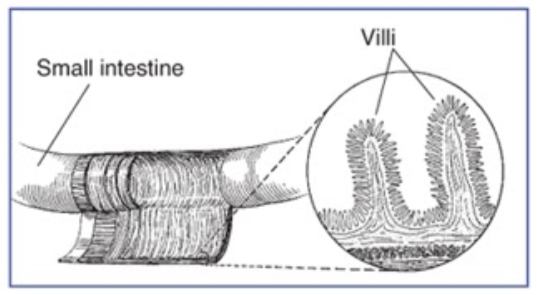
The small intestine is between 4.5 and 10.5 meters long
The hair like fibers in the ridges and folds of the small intestine called villi
Each villus has capillaries to absorb nutrients, is only 0.5mm long and has micro villi
The texture of the small intestine is similar to velvet
The beginning of the small intestine is called the duodenum
Bicarbonate is secreted in the duodenum to neutralize the stomach acid
The liver produces a substance called bile salts which is stored in the gall bladder and released into the duodenum
Bile salts are alkaline and help in turning the chyme alkaline for the pancreatic lipase to activate
Bile salts helps break the fats in chyme into smaller chunksAs the chyme is watery, the fats and oils clump up this process is called emulsification
The lipase secreted by the pancreas into the duodenum then break down the fats in chyme into fatty acids and monoglycerides
The chyme passes through a sphincter into the large intestine
Large intestine:Also called the colon
The large intestine is around 1.5 meters long
The large intestine absorbs water and bile salts from the chyme
The chyme can spends close to 36 hours in the large intestine
The beginning the of the large intestine is called the cecum
At one end of the cecum is the appendix though thought to be useless, it contains a sample of the gut bacteria to help restore the gut microbiome after illness
At the other end of the large intestine is the rectum where the chyme turned into poop collects until it is excreted by both anal sphincters through the anus to the outside